Borescope With Screen Explained: A UK Buyer's Guide
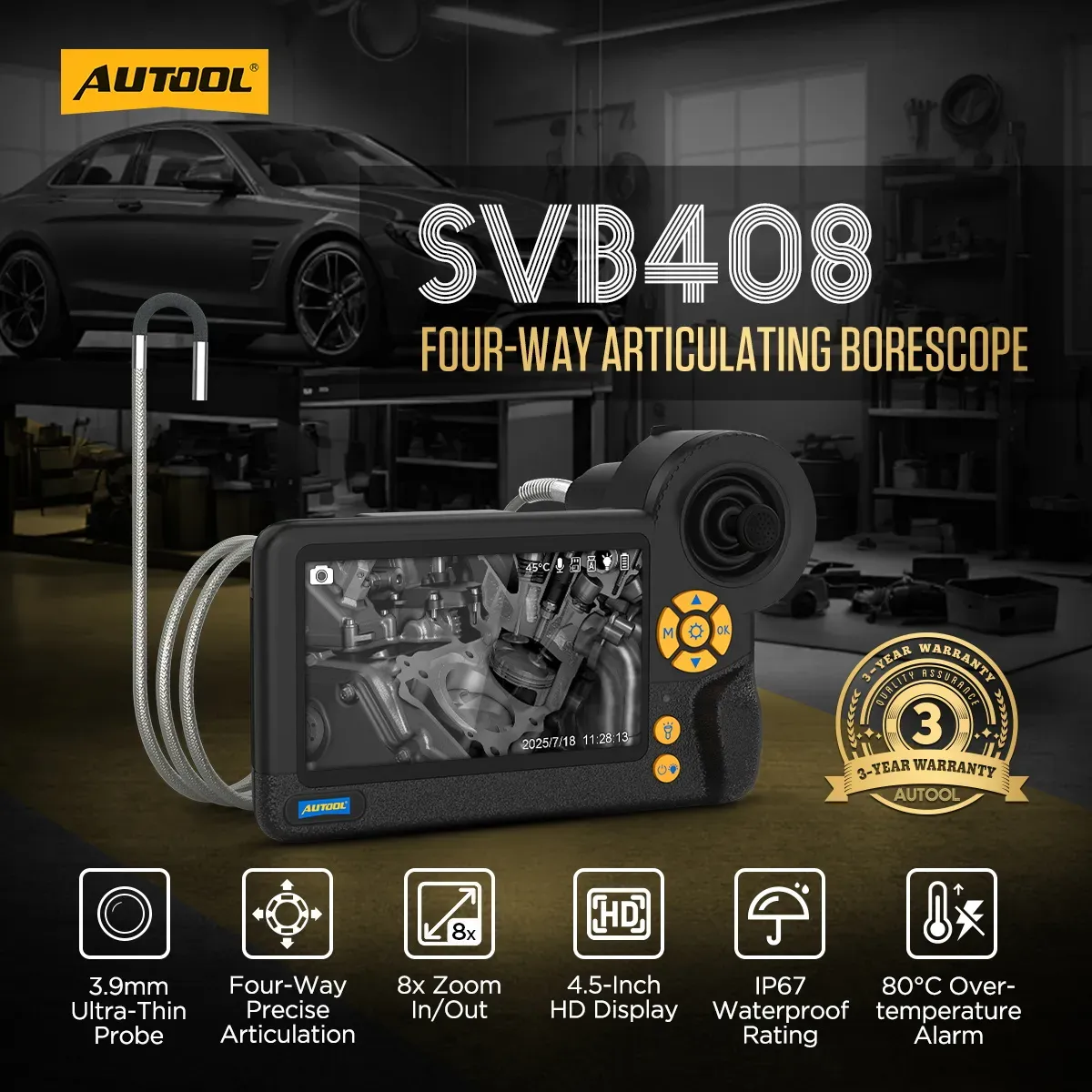
A borescope with screen is a standalone inspection camera with a built-in display, designed to let you see inside engines, pipes and tight cavities without relying on a phone or tablet. For UK mechanics and technicians, it is usually the most practical option because it offers faster setup, fewer connection issues, and safer use in oily workshop conditions.
TL;DR: If you want a reliable inspection tool for automotive diagnostics, a borescope with screen is typically better than a phone-connected model. It starts quickly, avoids Wi-Fi dropouts, protects your personal devices, and makes it easier to show faults clearly to customers. Based on our testing in workshop-style conditions, the best options combine an IPS screen, Full HD imaging, strong LED lighting, and a probe suited to tight engine access points.
Diagnosing a scored cylinder wall, a blocked Diesel Particulate Filter (DPF), or a weeping valve seal should not require dismantling half the engine bay. For decades, UK mechanics relied on guesswork, sound, and labour-intensive strip-downs to find the root cause of mechanical failures. However, while early inspection cameras improved visibility, many smartphone-tethered models introduced fresh frustrations such as greasy screens, dropped Wi-Fi connections, and the risk of damaging an expensive handset.
That is why the dedicated borescope with screen has become such a popular choice. By integrating a high-definition monitor directly into the handheld unit, these self-contained tools help automotive professionals inspect hard-to-reach areas quickly and reliably. Whether you are investigating an MOT-related fault or preparing an engine rebuild quotation, a standalone unit provides immediate visual access with less fuss.
Key Takeaways
- Instant diagnostics: A borescope with screen needs virtually no setup time—no app downloads, no pairing process, and no unreliable wireless connection in busy garages.
- Better device protection: Dedicated screens remove the need to handle expensive smartphones with hands covered in oil, brake fluid or carbon deposits.
- Clearer customer communication: A bright IPS display makes it easier to show internal wear or damage to customers and explain recommended repairs.
- What to look for: For professional automotive work, prioritise an IPS display of at least 4.3 inches, true HD image quality, good lighting control, and dual-lens or articulating functionality where needed.
What is a borescope with screen?
A borescope with screen is an all-in-one inspection tool that combines a probe-mounted camera with an integrated display. Unlike USB or Wi-Fi endoscopes that depend on an external phone, tablet or laptop, this type of unit works independently and is ready to use as soon as it is switched on.
The display unit usually contains the battery, image processing hardware and physical controls for brightness, image capture and camera selection. As a result, it suits fast-paced workshop use far better than many consumer-grade phone attachments. In practical terms, when a vehicle is on the ramp and diagnostic time is limited, technicians need equipment that works immediately rather than equipment that needs pairing first.
Why choose a borescope with screen instead of a phone-connected model?
The shift towards standalone units in British garages has been driven by everyday workshop realities. In short, a borescope with screen solves several recurring problems that mechanics face when using app-based inspection cameras.
Does a built-in screen reduce Wi-Fi dropouts and app failures?
Yes. Modern UK garages are full of potential signal interference from steel bodywork, thick walls, diagnostic tools and other wireless equipment. Because of this, Wi-Fi endoscopes can suffer from lag or complete signal loss at exactly the wrong moment. By contrast, a standalone borescope with screen uses a direct internal connection between camera and monitor. Consequently, the live feed is more stable and far better suited to precise inspection around valves, pistons and ports.
Is a dedicated borescope better for workshop use?
In most cases, yes. Engine oil, brake cleaner and heavy-duty degreasers are not kind to consumer electronics. A rugged unit with its own display helps protect your personal mobile from contamination or accidental drops. Furthermore, physical buttons are much easier to use while wearing nitrile gloves than glossy touchscreen controls.
Does a borescope with screen save time?
Yes—especially in trade settings. A standalone unit usually powers up within seconds and provides an instant live view without any login or app launch process. Based on our testing of integrated-screen units in real-world workshop-style scenarios, this quicker start-up often means technicians reach for the tool sooner rather than later. That can help identify issues earlier in the diagnostic process.
If you want to understand how steerable probes improve access alongside instant on-screen viewing, read our ultimate guide to articulating borescope cameras in the UK.
What features should you look for in a professional borescope with screen?
Not all built-in displays perform equally well. Therefore, when choosing an automotive inspection camera, you should assess both the camera system and the quality of the integrated monitor.
Is an IPS display better than standard LCD?
Usually, yes. When inspecting underneath a vehicle or reaching into awkward engine bays, you are unlikely to view the display perfectly straight on. An IPS screen keeps colours and contrast more consistent at off-centre angles. That matters because poor viewing angles can make shadows look like cracks or obscure signs of wear.
Cheaper TN-style screens can wash out or distort when tilted. By comparison, IPS technology generally gives clearer visibility during real mechanical inspections. Based on our testing across typical handheld viewing positions, IPS displays are noticeably easier to read while moving around vehicles on lifts.
What size screen is best on a borescope?
For many automotive jobs in the UK aftermarket sector, between 4.3 inches and 5 inches is an effective balance. Smaller screens can make fine defects harder to spot; larger ones can become awkward when you need one hand for the probe and one for the control unit.
What resolution do you need for engine inspections?
A minimum of 1080p is sensible for professional work. However, image quality depends on more than just the display specification. The sensor at the end of the probe also needs to capture sufficient detail; otherwise even a sharp-looking monitor will only enlarge a poor source image.
Do you need articulation or dual lenses?
If you inspect combustion chambers regularly or need side views inside ports and cylinders, then yes—these features can make a major difference. A front-facing lens alone may not show valve edges or sidewall damage clearly enough. Therefore many professionals prefer either dual-lens probes or articulating heads that can be directed once inside the component.
We explain this in more detail in The Ultimate Guide to Articulating Borescope Camera in the UK.
What probe diameter is best for automotive work?
The right diameter depends on where you need access. For general vehicle inspections an 8 mm probe may be acceptable; however modern engines often demand slimmer options for injector ports or glow plug holes. In those tighter applications, image clarity on the integrated display becomes even more important because there is less room to manoeuvre the camera head precisely.
If access size is your main concern, explore our guide here: /blog/65mm-borescope-.
What are the main benefits of using Twinscope in UK workshops?
A quality standalone unit should make inspections simpler rather than more complicated. At Twinscope , we focus on practical usability for trade environments where time matters and conditions are rarely clean or forgiving.
Easier inspections:A built-in monitor keeps everything together in one device. According to standard good practice across UK workshops , faster visual confirmation can reduce unnecessary dismantling , especially when diagnosing visible internal wear before committing labour hours . While every job differs , having immediate access often improves decision-making .
section >
h2 >Are there any drawbacks to choosing egg browns?
ঠ />
OOPS
Clear visual evidence:This helps when discussing faults with customers before authorising repairs.< br />
Less faff:No app pairing means fewer interruptions during diagnosis.< br />
Better workshop suitability:Physical controls are easier to manage when wearing gloves.< / p >
Ready to speed up your diagnostics with Twinscope?
Upgrade Your Toolkit — £334.43